Paramount Takes $30 per Share Bid for Warner Bros. to Shareholders After Board Rejects Talks
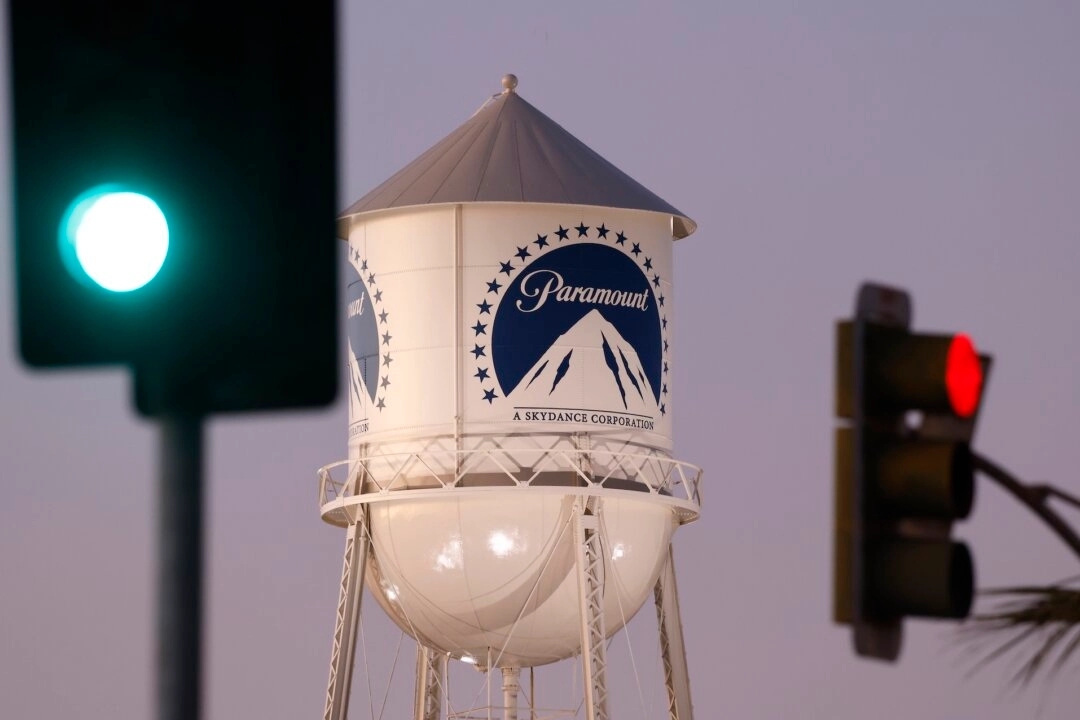
Paramount appealed directly to shareholders after the Warner Bros. board rebuffed talks, saying that its offer provides more value and certainty than Netflix’s.

The Paramount logo is displayed on the water tower at Paramount Studios in Los Angeles on Dec. 8, 2025. Mario Tama/Getty Images
Paramount Skydance Corporation on Jan. 8 took its $30-per-share all-cash bid for Warner Bros. Discovery (WBD) directly to shareholders, escalating a takeover fight after WBD’s board rebuffed further engagement and urged investors to back a rival deal with Netflix.
In a statement, Paramount said WBD’s refusal to engage followed months of discussions and came despite Paramount amending its proposal to address financing and execution concerns, including an irrevocable personal guarantee from billionaire Larry Ellison backing the equity portion of the offer.
Paramount said its bid offers greater value and certainty than Netflix’s cash-and-stock agreement, which it said has become less valuable as Netflix shares have fallen and includes what Paramount described as hidden risks.
“$30.00 per share in cash is easy to value,” Paramount said, contrasting its proposal with what it characterized as an increasingly complex and uncertain Netflix transaction.
“Paramount’s analysis … shows the total value of the Netflix transaction to WBD shareholders today is $27.421–unmistakably inferior to Paramount’s $30.00 in cash,” the media giant said.
Paramount urged WBD shareholders to tender their shares—selling them directly to Paramount for $30 per share in cash—into its takeover offer before a Jan. 21 deadline, effectively bypassing the WBD board.
“Our offer clearly provides WBD investors greater value and a more certain, expedited path to completion,” David Ellison, chairman and CEO of Paramount, said in a statement. “Throughout this process, we have worked hard for WBD shareholders and remain committed to engaging with them on the merits of our superior bid.”
Warner Bros. Discovery did not immediately respond to a request for comment on Paramount’s decision to take its $30-per-share all-cash bid directly to shareholders.
WBD Board Backs Netflix Bid
Paramount’s decision to double down on its takeover offer—along with its direct appeal to stockholders—comes a day after the WBD board formally recommended that shareholders reject Paramount’s bid, saying it remained inferior to Netflix’s proposal across several key measures.
“The Board unanimously determined that Paramount’s latest offer remains inferior to our merger agreement with Netflix,” Samuel Di Piazza Jr., chair of the WBD board, said in a Jan. 7 statement. He cited “insufficient value” of Paramount’s offer, concerns over what he called an “extraordinary amount of debt financing,” execution risks, and a lack of shareholder protections should Paramount’s transaction fail to close.
“Our binding agreement with Netflix will offer superior value at greater levels of certainty, without the significant risks and costs Paramount’s offer would impose on our shareholders,” Di Piazza said.
Netflix announced in December that it had agreed to acquire WBD in a cash-and-stock transaction valued at $27.75 per share, comprising $23.25 in cash and $4.50 in Netflix stock, for an equity value of about $72 billion.
The deal, unanimously approved by both boards, would see Netflix acquire WBD’s film studio and streaming assets, including HBO and HBO Max, while WBD spins off its global linear television networks into a separate, publicly traded company known as Discovery Global.
Paramount has since made numerous offers, including hostile ones, to acquire all of WBD, including its cable networks, with its latest all-cash proposal valuing the company at about $108.4 billion.
In its Jan. 8 statement, Paramount said it had cured every issue raised by WBD’s board, most notably by securing Larry Ellison’s personal guarantee of roughly $40 billion and increasing its regulatory termination fee, payable to WBD shareholders if the deal failed to receive antitrust or regulatory approval, to $5.8 billion.
Paramount also took aim at the economics of the Netflix deal, saying that the stock component has declined in value and that the Discovery Global spin-off could be worth little or nothing to shareholders once debt and corporate overhead expenses are allocated.
“This means that the Netflix transaction–which is already headlined as a cash-and-stock mix–is likely to deliver even less cash than its stated headline value,” Paramount said. “By contrast, Paramount’s proposal is 100% cash and definitionally completely certain.”
Netflix, for its part, has praised WBD for reaffirming the merger agreement between the two companies. Ted Sarandos and Greg Peters, co-CEOs of Netflix, said in a Jan. 7 statement that the streaming giant’s offer provides the “greatest value” to shareholders, consumers, content creators, and the entertainment industry more broadly.
“By joining forces, we will offer audiences even more of the series and films they love—at home and in theaters—expand opportunities for creators, and help foster a dynamic, competitive, and thriving entertainment industry,” Sarandos and Peters said.
A Netflix–WBD tie-up has drawn scrutiny from politicians and market watchers alike, with concerns focusing on market concentration in streaming.
President Donald Trump said in December that the deal “could be a problem” because the merged companies would command a “big market share,” while Sen. Elizabeth Warren (D-Mass.) has called it an “anti-monopoly nightmare.”
Paramount has pitched its offer as a more certain alternative to the Netflix deal, which may face heightened antitrust scrutiny.
Andrew Moran contributed to this report.











Post Comment