Xi Sends Strong Message: Loyalty First for China’s Military at Key CCP Meetings
Introduction
In a powerful and closely watched statement, Xi Jinping has warned China’s military leadership against any signs of disloyalty during the Chinese Communist Party’s (CCP) top political meetings. The message underscores the importance of absolute allegiance to the Party, especially at a time of rising geopolitical tensions and internal restructuring within China’s armed forces.
This development highlights not only the Chinese government’s focus on discipline and unity but also signals broader implications for global politics and military strategy. As China continues to position itself as a global power, maintaining strict control over its military remains a top priority.
Understanding the Context: CCP’s Top Political Meetings & China’s Military
China’s most important political gatherings, including sessions led by the Chinese Communist Party, serve as platforms to set national policies and reinforce leadership authority.
Why These Meetings Matter
- They define China’s political and economic direction
- Senior leaders review national security strategies
- Military and Party alignment is reinforced
- Key decisions affecting global relations are made
At these meetings, unity is not just encouraged—it is expected. Any hint of division or disloyalty is treated as a serious concern.
Xi Jinping’s Warning: What Was Said
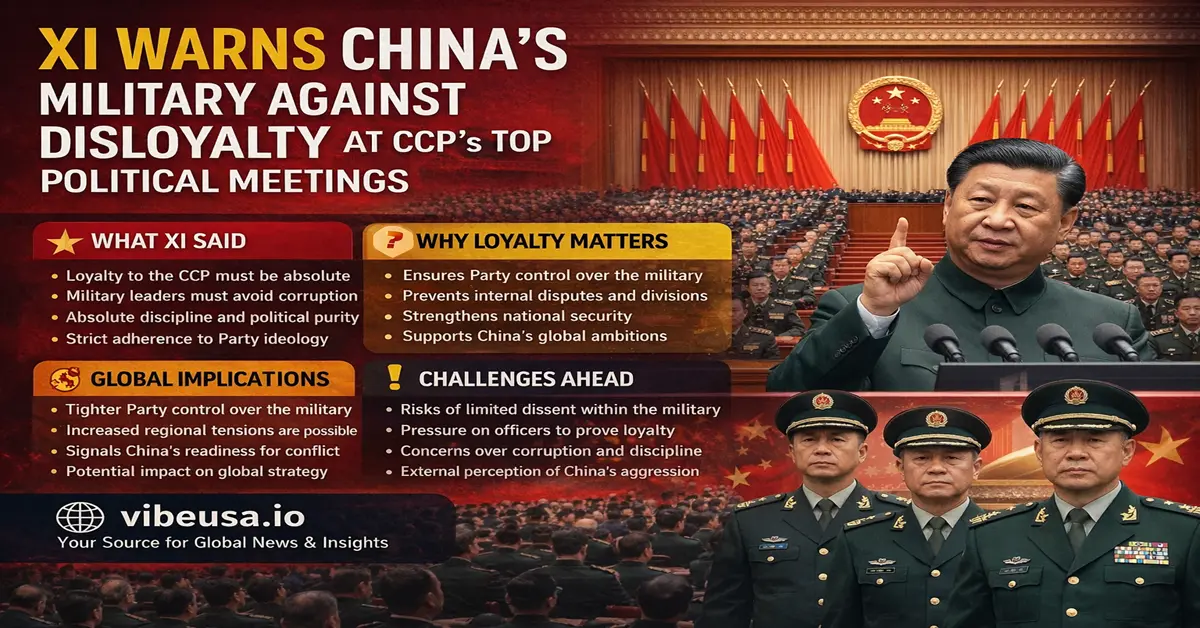
During the meetings, Xi Jinping emphasized the need for the military to remain “absolutely loyal, pure, and reliable.” This message was directed at the People’s Liberation Army, which plays a central role in China’s national security and political stability.
Key Points from the Warning
- Loyalty to the Party must be unwavering
- Military leaders must avoid corruption and misconduct
- Discipline and obedience are essential
- Political alignment with CCP ideology is mandatory
This strong stance reflects ongoing concerns about internal discipline and the need to ensure that the military remains firmly under Party control.
Why Loyalty Is a Top Priority for China
The relationship between the CCP and the military is unique. Unlike many countries where the military serves the state, in China, the military serves the Party.
Reasons Behind the Focus on Loyalty
1. Maintaining Political Control
The CCP’s authority depends heavily on its control over the armed forces. Any disloyalty could threaten the Party’s power.
2. Preventing Internal Conflicts
Ensuring unity within the military reduces the risk of internal disputes or factionalism.
3. Strengthening National Security
A disciplined and loyal military is essential for responding to both domestic and international challenges.
4. Supporting Global Ambitions
As China expands its influence, a reliable military is crucial for achieving strategic goals.
Recent Developments in China’s Military
In recent years, China has undertaken significant reforms within its military structure. These changes aim to modernize the armed forces and eliminate corruption.
Key Changes
- Removal of high-ranking officials over corruption allegations
- Increased focus on political education within the military
- Modernization of weapons and defense systems
- Greater emphasis on centralized command
These reforms indicate that the warning from Xi Jinping is part of a broader effort to strengthen discipline and control.
Global Implications of Xi’s Statement
The warning is not just an internal matter—it has international significance as well.
What It Means for the World
- Increased Military Readiness: A more disciplined military could respond faster to global conflicts
- Stronger Central Control: Decisions may become more centralized under Party leadership
- Rising Geopolitical Tensions: Neighboring countries may view this as a sign of increased assertiveness
- Strategic Stability or Uncertainty: While unity can bring stability, it may also lead to more decisive actions in global disputes
Countries around the world are closely monitoring these developments to understand China’s future direction.
The Bigger Picture: Power, Control, and Stability
The message from Xi Jinping reflects a broader theme in Chinese governance—maintaining control while pursuing growth and global influence.
At vibeusa.io, we analyze such developments to provide clear insights into global political trends. This event highlights how leadership decisions in one country can have ripple effects worldwide.
Challenges and Concerns
While the emphasis on loyalty may strengthen control, it also raises questions.
Potential Issues
- Limited Dissent: Strict loyalty requirements may suppress constructive criticism
- Over-Centralization: Too much control could slow decision-making in complex situations
- International Perception: Other nations may interpret this as a sign of rigidity or aggression
- Internal Pressure: Military leaders may face increased scrutiny and stress
Balancing discipline with flexibility will be key to long-term success.
What Lies Ahead for China’s Military
Looking forward, China’s military is expected to continue evolving under strict Party oversight.
Future Trends of China’s Military
- Continued anti-corruption campaigns
- Greater integration of technology and cyber capabilities
- Stronger political education programs
- Expansion of global military presence
The emphasis on loyalty will likely remain a cornerstone of China’s military strategy.
Conclusion
The warning issued by Xi Jinping at the CCP’s top political meetings sends a clear and powerful message: loyalty to the Party is non-negotiable. As China navigates complex domestic and international challenges, maintaining strict control over its military will remain a top priority.
While this approach may strengthen unity and discipline, it also brings challenges that must be carefully managed. Ultimately, the world will be watching closely as China continues to shape its military and political future.













Post Comment