Can Tariffs fix The US-CHINA Trade Imbalance?
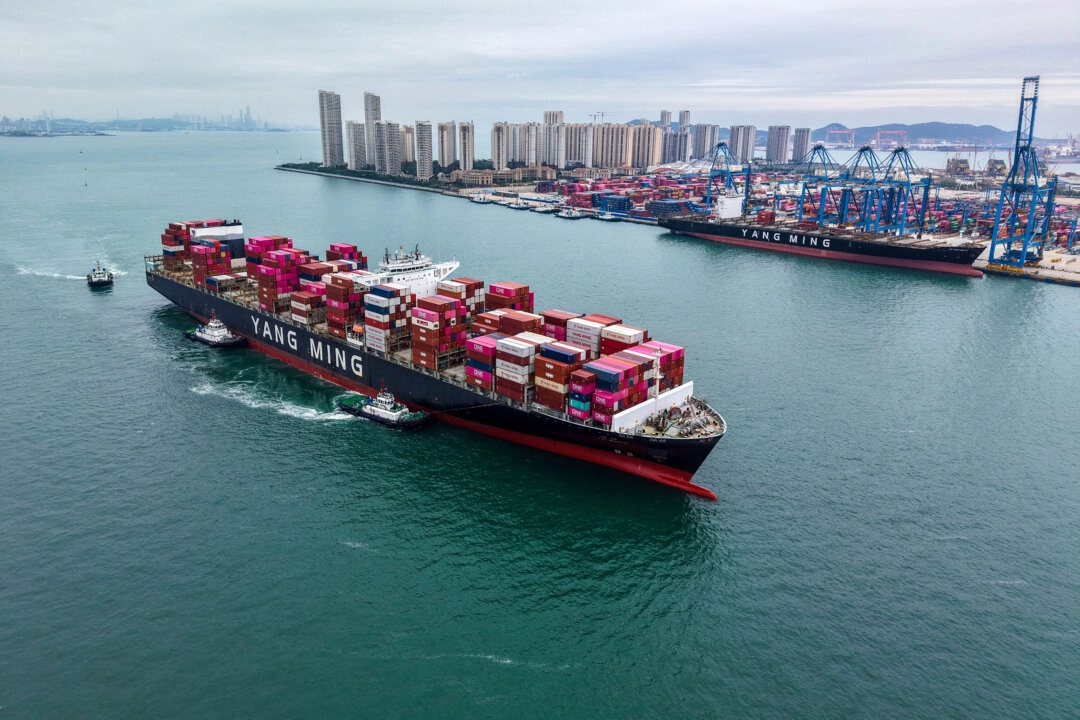
Tariffs on foreign partners played a big role in China’s economic transformation and could be a big factor in the U.S. recovery.
The common understanding of tariffs is that they are bad for trade. That can be true, but not always. They certainly helped China develop in a number of ways.
But before that discussion, a brief review of tariffs is helpful.Yes, Tariffs Can Raise Prices
In simple terms, tariffs are a tax foreign companies must pay to sell their goods in a target market, such as China or the United States. The typical result is that foreign goods become more expensive because they raise the price of the goods they’re selling via the “market access tax” that tariffs truly are.
The impact of tariffs on prices can ripple through the economy. When the price of goods rises, the prices of other goods and services increase as well, because the tariff costs are passed from producers to importers, distributors, wholesalers, retailers, and resellers before being passed on to consumers.
Not Always Intended to Protect Domestic Producers
Tariffs are often meant to protect domestic producers from foreign producers with lower labor costs, government subsidies, economies of scale, and other advantages. Domestic producers often raise their prices as well to capture more profit because their foreign competitors have raised theirs. For most goods, higher prices typically mean lower overall consumption.
In the case of China in the late 1980s and throughout the ‘90s, there were few domestic producers of anything the developed world wanted. China didn’t make cars, furniture, computers, appliances, etc., so there was no need to protect non-existent domestic producers. At the same time, labor costs in developed economies were high by global standards. China had abundant, cheap labor, offering huge profit opportunities for foreign producers.
And yet China still imposed tariffs. There were several good reasons for that.
Wallowing in deep poverty from its planned economy, China made its large labor pool available to the developed world in exchange for technologies, technical know-how, and direct investment. China charged tariffs upfront to make money immediately, long before any of their cheap labor and manufacturing capabilities had come to fruition. It also acquired hard currency, which it desperately needed.
China as a Business Opportunity
Essentially, foreign companies paid in advance for the opportunity to help China develop, expecting to produce goods much cheaper than at home and sell to China’s large market, once its income level rose enough to do so. In the meantime, tariffs on capital goods and products brought into the country provided China with immediate money, lots of it, without having even to lift a finger.
The logic was similar to the Marshall Plan to rebuild Europe after World War II. American manufacturers couldn’t sell goods to a war-torn Europe; it needed rebuilding to once more participate in the global economy. Foreign companies saw China as a business opportunity that they could not afford to pass up.
China Disrupted the Global Economy
Thus, China’s transition from global isolationism to the world’s manufacturing center of gravity fundamentally disrupted the global economy.
For several decades, massive amounts of foreign capital have flowed into China in the form of tariffs and direct investment, fueling China’s growth as it hollowed out the economies of the West. Those factors raised income levels for hundreds of millions of people and gave China the industrial, scientific, and supply base it has today. All the while, tariffs remained in place.
But Beijing also imposed unconventional tariffs in the form of trade policies that required foreign companies to share their intellectual property (IP), designs, and even ownership with Chinese companies, many of which were state-owned enterprises (SOEs), and many more that would later become SOEs.
The Chinese regime’s IP theft, forced technology transfers, and other crippling adversarial practices against their trading partners amounted to the most egregious tariffs the world has ever seen, driving companies out of China and out of business after taking them for all they had in terms of technology, design, processes, IP, and capital.
In other words, communist China treated the rest of the world the way it treats its own people, but with a much grander payoff.
Did China’s partners make money? They certainly did for years. But China’s trading partners, especially the United States and Europe, lost much of their manufacturing bases, jobs, and domestic supply chains as they moved operations to China to take advantage of its cheap labor.
On the flip side, partnering with and stealing the wealth, talent, knowledge, and technology whenever and wherever it could from the wealthiest and most innovative companies and countries in the world made China what it is today.
US Tariffs
Today, the United States is disrupting global trade with its own high tariffs on trading partners, including China, Europe, and many other nations. But it’s not doing so in a vacuum. Looking at just a few key factors tells a very different story about tariffs than the traditional negative image that some economists typically portray.
For example, the world’s companies are fleeing China for all the reasons mentioned above, plus the fact that there are now cheaper labor costs available in India, Thailand, Mexico, and other places.
What’s more, as clumsy as high tariffs seemed, they have been successful in disrupting the global economic assumptions regarding U.S. trade policies. The argument that tariffs are damaging to free trade doesn’t account for differences in nations’ economies, levels of subsidization, adversarial trade tactics, and other disparities.
US Trading Partners Have Choices
The Trump administration is giving countries and companies a clear choice. They can either pay high tariffs to sell their goods to U.S. consumers or build factories and invest directly in the United States to avoid paying tariffs. With $7 trillion to $21 trillion in new trade and investment deals from Europe, Japan, the Middle East, and other partners, the tariff strategy seems to be working.
That strategy is also bolstered by the fact that the United States accounts for more than 30 percent of global demand, has the most liquid financial markets, the most transparent and effective legal system, and a business-friendly regulatory environment among developed countries.
It is becoming increasingly apparent that tariffs are the stick to hit U.S. trading partners, while trade deals and direct investment in the United States are the carrots that benefit both the U.S. economy and its trading partners. In short, the Trump administration’s tariff strategy is designed to leverage the U.S. position as the world’s largest economy and best market to steer trade and investment back into the United States, thereby creating more jobs, more demand for U.S. labor, and more wealth and innovation.
That’s more of a win-win for trading partners than the lopsided trading relationships they’ve endured with China over the past several decades.
Views expressed in this article are opinions of the author and do not necessarily reflect the views of The Epoch Times.









Post Comment