FBI Expands Global Reach: First Office in Ecuador Targets Drug Trafficking
Introduction
In a major step toward strengthening international law enforcement, the Federal Bureau of Investigation (FBI) has officially opened its first office in Ecuador. This move reflects the growing urgency to combat drug trafficking networks that stretch across continents. As Ecuador increasingly becomes a key transit hub for illegal drugs, this new collaboration between U.S. and Ecuadorian authorities signals a stronger, more coordinated response to organized crime.
Drug trafficking is no longer a localized issue—it is a global challenge that demands international cooperation. With this new office, the FBI aims to enhance intelligence sharing, support local enforcement, and disrupt criminal networks at every level. This development is not just important for Ecuador, but for global security as a whole.
Why Ecuador Matters in the Fight Against Drug Trafficking
Ecuador’s geographic and economic position has made it a strategic نقطة (point) in the global drug trade. While the country itself is not a major producer of narcotics, it plays a critical role in transportation and distribution.
- Strategic Location: Positioned between major drug-producing countries like Colombia and Peru
- Busy Ports: High-volume shipping routes make it easier to conceal illegal substances
- Rising Crime Rates: Increased gang activity linked to drug cartels
Because of these challenges, Ecuador has drawn global attention as a hotspot that requires international cooperation.
What the FBI Office in Ecuador Means
The establishment of an FBI office in Ecuador marks a major milestone in international law enforcement collaboration. This office will not replace local authorities but will work alongside them to strengthen capabilities.
Key Objectives of the FBI Presence
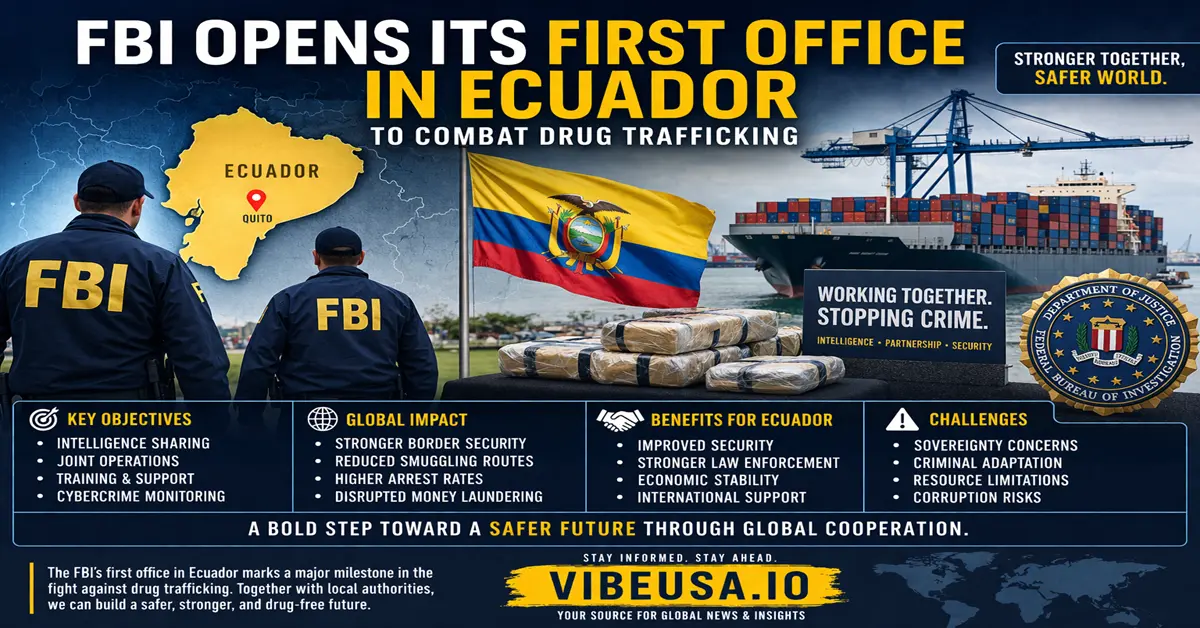
- Intelligence Sharing: Real-time exchange of data between U.S. and Ecuadorian agencies
- Joint Operations: Coordinated efforts to track and dismantle trafficking networks
- Training and Support: Providing expertise, technology, and investigative tools
- Cybercrime Monitoring: Tracking digital communications used by drug organizations
This collaboration is expected to improve the effectiveness of ongoing operations and help identify major criminal networks more quickly.
How This Move Impacts Global Drug Trade
The establishment of an FBI office in Ecuador is expected to have far-reaching effects on the global drug trade.
Expected Outcomes
- Stronger Border Security: Better tracking of drug shipments before they leave South America
- Reduced Smuggling Routes: Increased pressure on traffickers to abandon key routes
- Higher Arrest Rates: More coordinated raids and investigations
- Financial Disruption: Targeting money laundering networks tied to drug cartels
By targeting not just the drugs but also the financial and logistical networks behind them, this initiative aims to weaken organized crime significantly.
Benefits for Ecuador
While the initiative is global in scope, Ecuador stands to gain significantly from this partnership.
Positive Outcomes for Ecuador
Enhanced Security
With improved law enforcement capabilities, the country can expect a reduction in violence and crime linked to drug trafficking.
Stronger Institutions
Training and support from the FBI will help strengthen local police and investigative agencies.
Economic Growth
A safer environment can attract foreign investment and boost tourism, contributing to economic stability.
International Recognition
Partnering with a major agency like the FBI increases Ecuador’s credibility and standing on the global stage.
Positive Impacts
- Improved Security: Reduced violence linked to drug gangs
- Stronger Law Enforcement: Access to advanced training and resources
- Economic Stability: Safer environment for business and tourism
- International Support: Increased cooperation with global agencies
This partnership could play a key role in restoring public confidence and improving safety across the country.
Challenges and Concerns
Despite the positive outlook, there are challenges that cannot be ignored.
Potential Issues
- Sovereignty Concerns: Some may worry about foreign influence in local affairs
- Criminal Adaptation: Traffickers may shift routes or tactics
- Resource Limitations: Sustaining long-term operations requires ongoing funding
- Corruption Risks: Internal challenges could weaken enforcement efforts
Addressing these concerns will be crucial to ensure the long-term success of this initiative.
The Bigger Picture: Global Cooperation Against Crime
The FBI’s expansion into Ecuador reflects a broader trend of international collaboration against organized crime. Drug trafficking is not confined to one country—it’s a global issue that requires a united response.
At vibeusa.io, we believe that such developments highlight the importance of cross-border partnerships in tackling complex challenges. By combining resources, intelligence, and expertise, countries can build stronger defenses against criminal networks.
What This Means for the Future
Looking ahead, the FBI’s presence in Ecuador could set a precedent for similar partnerships in other regions affected by drug trafficking.
Future Possibilities
- Expansion of operations to neighboring countries
- Increased use of technology in tracking criminal networks
- Stronger global alliances against organized crime
- More proactive strategies rather than reactive enforcement
This move signals a shift toward a more coordinated and strategic approach to global security.
Conclusion
The opening of the FBI’s first office in Ecuador is a bold and strategic step in the fight against drug trafficking. By strengthening international cooperation, improving intelligence sharing, and supporting local law enforcement, this initiative has the potential to make a real impact.
While challenges remain, the benefits of such collaboration far outweigh the risks. As global crime continues to evolve, partnerships like this will be essential in maintaining security and stability worldwide.











Post Comment