Who Is Killing Arizona’s Wild Horses? A Disturbing Mystery Unfolds
Introduction
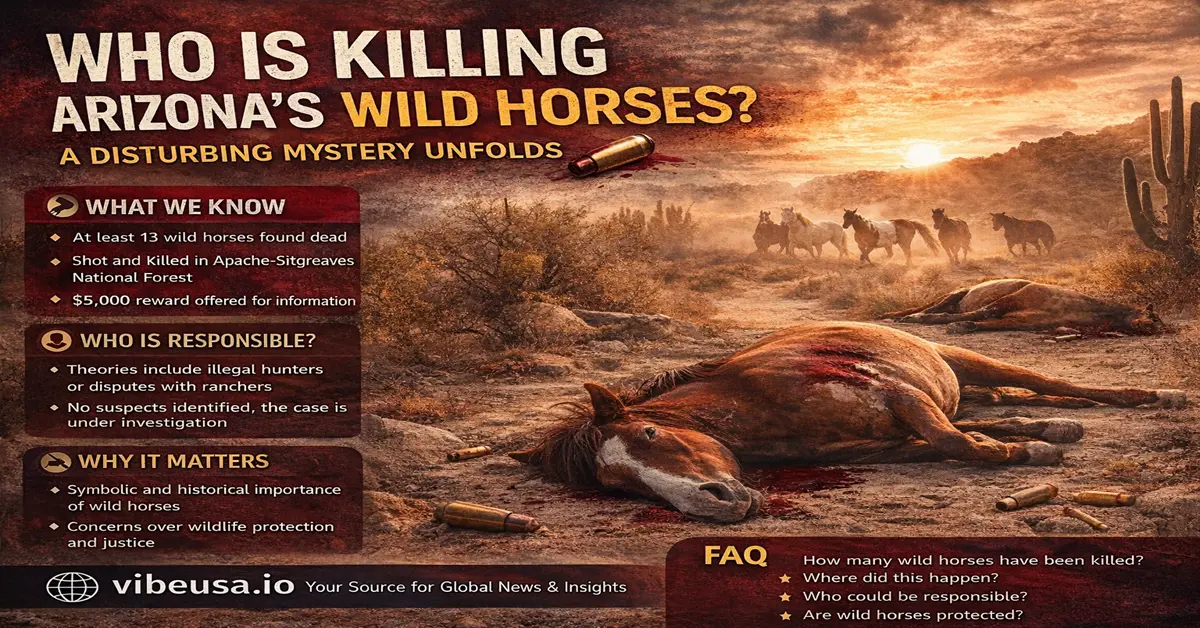
A troubling and emotional mystery is unfolding in the American West: Who is killing Arizona’s wild horses? These iconic animals, symbols of freedom and natural beauty, are being found dead under alarming circumstances. In recent months, multiple horses have been discovered with gunshot wounds, sparking outrage, fear, and urgent calls for justice.
The situation has raised serious questions about wildlife protection, human conflict, and law enforcement challenges. As investigations continue, the story is drawing national attention and highlighting the fragile balance between humans and nature.
What Is Happening in Arizona?
Recent reports confirm a shocking pattern of violence against wild horses in eastern Arizona.
Key Facts
- At least 13 wild horses have been found dead in recent weeks
- All deaths were caused by gunshot wounds, confirmed through necropsies
- Incidents occurred in the Apache-Sitgreaves National Forest
- Authorities believe the killings may be connected and part of a larger pattern
According to officials, nine horses were initially found dead, followed by four more discovered later in the same region.
This is not an isolated incident—it appears to be a targeted and repeated act of violence.
Where Are These Killings Taking Place?
The incidents are centered in the Apache-Sitgreaves National Forest, a vast and scenic area known for its wildlife and natural beauty.
Why This Location Matters
- Home to the famous Heber wild horse herd
- Popular with tourists, photographers, and nature lovers
- Remote terrain makes monitoring difficult
- Limited federal protection for these specific horses
These horses are considered feral, meaning they are not fully protected under federal law, which complicates enforcement efforts.
Who Could Be Responsible?
As of now, no suspects have been officially identified, but several theories are being considered.
Possible Explanations
1. Illegal Hunting or Poaching
Some believe individuals may be illegally targeting the horses for unknown reasons, possibly for sport or frustration.
2. Local Conflicts
There are mixed opinions among locals about wild horses. Some view them as a nuisance.
- Compete with livestock for food and water
- Interfere with hunting activities
- Damage vegetation and land
These tensions may have escalated into violence.
3. Organized Killing
Authorities are investigating whether the shootings are connected, suggesting a deliberate and repeated act rather than random incidents.
4. Unknown Motives
The lack of clear evidence leaves room for uncertainty, making this an ongoing mystery.
Law Enforcement Response
Authorities are taking the situation seriously and urging public cooperation.
Actions Taken
- Investigation launched by local law enforcement
- Collaboration with forest officials
- A $5,000 reward offered for information
- Public tip lines established
Officials believe someone in the community may have information that could help solve the case.
Why Are Wild Horses Important?
Wild horses are more than just animals—they are a symbol of history, culture, and natural heritage.
Their Significance
- Cultural Symbol: Represent freedom and the American frontier
- Tourism Value: Attract visitors from across the country
- Ecological Role: Part of the natural ecosystem
- Historical Legacy: Descendants of horses brought centuries ago
The loss of these animals affects not only the environment but also local communities and cultural identity.
A Bigger Issue: Human vs. Wildlife Conflict
The killings highlight a broader issue—conflict between humans and wildlife.
Key Challenges
- Resource Competition: Horses compete with livestock for grazing land
- Drought Conditions: Limited water and food increase tensions
- Population Management: Growing horse populations strain ecosystems
- Legal Gaps: Feral status limits protection and enforcement
In fact, federal agencies like the Bureau of Land Management regularly manage wild horse populations through roundups due to environmental concerns.
However, these management efforts are controversial and often criticized by animal advocates.
Public Reaction and Advocacy
The killings have sparked outrage among animal lovers and advocacy groups.
Voices from the Community
- Activists describe the killings as “heinous” and “cowardly”
- Calls for stricter protection laws are growing
- Volunteers continue to monitor and protect the herds
- Increased awareness on social media and news platforms
Many believe stronger legal protections are needed to prevent future incidents.
The Role of Conservation and Protection
Protecting wild horses requires a balanced approach that considers both environmental sustainability and animal welfare.
Possible Solutions
- Stronger legal protections for feral horses
- Increased surveillance in vulnerable areas
- Community education and awareness programs
- Collaboration between government and advocacy groups
- Humane population control methods
Without action, similar incidents could continue or even escalate.
The Bigger Picture: What This Means for the Future
The mystery of Arizona’s wild horse killings is about more than just one region—it reflects global challenges in wildlife conservation.
At vibeusa.io, we highlight stories like this to bring attention to critical issues affecting both people and the environment. This case serves as a reminder that protecting nature requires collective responsibility.
Conclusion
The question remains: Who is killing Arizona’s wild horses? While investigations continue, the tragedy has already left a lasting impact. These animals, symbols of freedom and resilience, are being lost to senseless violence.
Solving this mystery is not just about finding those responsible—it’s about ensuring justice, strengthening protections, and preventing future harm. As awareness grows, there is hope that these iconic creatures will receive the protection they deserve.











Post Comment