Divided Response: Democrats Clash Over Trump’s Iran Strikes as War Powers Debate Intensifies
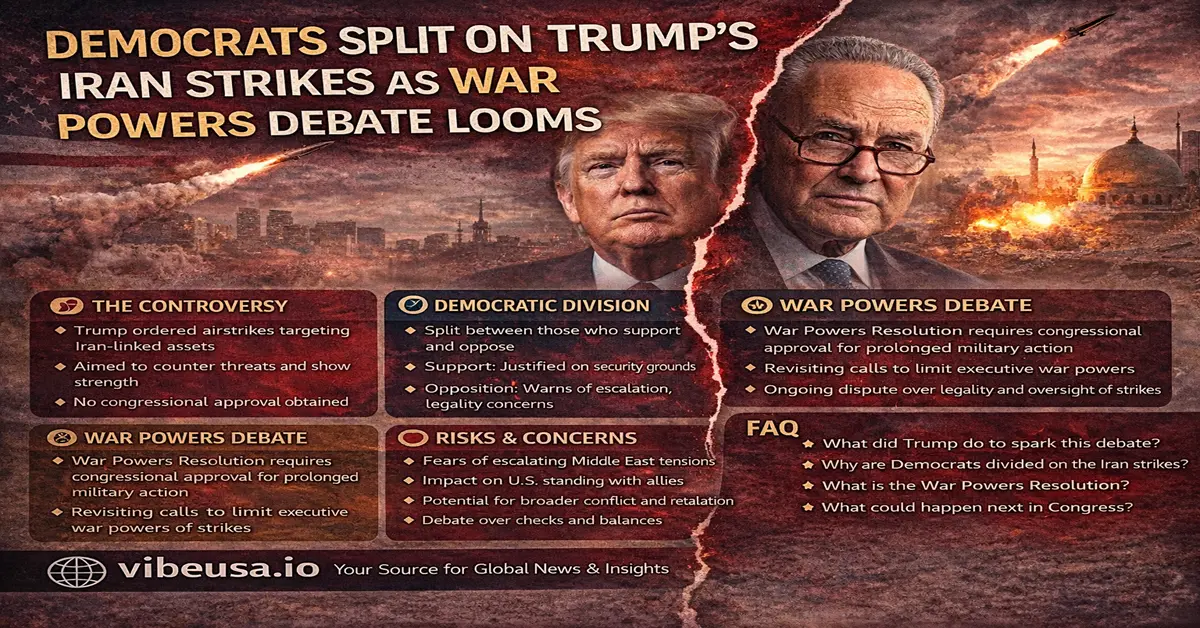
Introduction
Political tensions in Washington are rising as Democrats find themselves divided over former President Donald Trump’s military strikes on Iran. While some lawmakers argue the action was necessary for national security, others question its legality and warn of escalating conflict without proper congressional approval.
At the center of the debate is a critical constitutional issue: who has the authority to declare war? As discussions grow louder, the situation is not only shaping domestic politics but also influencing global perceptions of U.S. leadership and military policy.
What Happened: A Quick Overview
The controversy stems from military strikes ordered by Donald Trump targeting Iranian-linked assets. The move was framed as a defensive action, but it quickly sparked debate across political lines.
Key Details
- Strikes aimed at Iranian military or proxy targets
- Justified by national security concerns
- No formal declaration of war from Congress
- Immediate political backlash and debate
This situation has reopened long-standing questions about presidential powers in times of conflict.
Why Democrats Are Divided
The Democratic Party is not unified in its response, with lawmakers expressing differing views based on legal, political, and strategic concerns.
Two Main Perspectives
1. Support for the Strikes
Some Democrats believe the action was justified.
- Protecting U.S. interests and personnel
- Responding to potential threats
- Demonstrating strength on the global stage
These lawmakers argue that swift action is sometimes necessary in volatile situations.
2. Opposition and Concern
Others strongly disagree with the decision.
- Lack of congressional approval
- Risk of escalating into a larger war
- Concerns over transparency and accountability
For this group, the issue is not just about the strikes themselves but about the process behind them.
The War Powers Debate Explained
At the heart of the controversy is the War Powers Resolution, which aims to limit the president’s ability to engage in military action without congressional consent.
Key Provisions
- The president must notify Congress within 48 hours of military action
- Military engagement cannot continue beyond 60 days without approval
- Congress has the authority to declare war
Why It Matters Now
The strikes on Iran have reignited debate over whether these rules were followed—and whether they are still effective in modern conflicts.
Political Implications in Washington
The division among Democrats reflects broader political challenges.
Key Impacts
- Internal Party Tension: Differences in opinion could affect party unity
- Legislative Action: Calls for new resolutions to limit executive power
- Election Dynamics: The issue may influence voter perception
- Bipartisan Debate: Some Republicans also have concerns about war powers
This debate is likely to shape political discussions in the months ahead.
Global Reactions and Concerns
The situation is not just a domestic issue—it has international consequences.
Global Implications
- Increased tensions in the Middle East
- Concerns among U.S. allies about escalation
- Potential retaliation from Iran
- Impact on global oil markets and security
World leaders are closely watching how the U.S. handles both the military and political aspects of this situation.
Risks of Escalation
One of the biggest concerns raised by critics is the possibility of a broader conflict.
Potential Risks
- Military retaliation leading to further strikes
- Involvement of additional countries
- Long-term regional instability
- Increased economic and security challenges
Avoiding escalation will require careful diplomacy and strategic decision-making.
The Role of Congress Moving Forward
Congress is expected to play a central role in the next phase of this debate.
Possible Actions
- Introducing resolutions to limit military action
- Holding hearings to review the decision-making process
- Seeking greater transparency from the executive branch
- Reassessing the effectiveness of existing laws
These steps could redefine the balance of power between Congress and the presidency.
Public Opinion and Media Coverage
Public reaction to the strikes has been mixed, reflecting the divide among political leaders.
Key Trends
- Some support strong military action
- Others fear unnecessary conflict
- Increased attention from national and international media
- Growing interest in constitutional and legal issues
This level of engagement highlights the importance of the issue for everyday citizens.
The Bigger Picture: Power, Policy, and Accountability
The debate over Donald Trump’s Iran strikes goes beyond a single event. It raises fundamental questions about how the United States uses military power and who gets to decide.
At vibeusa.io, we focus on breaking down complex global issues into clear insights. This situation demonstrates how political decisions, legal frameworks, and international relations are deeply interconnected.
What Happens Next?
The situation remains fluid, and several developments are expected.
What to Watch
- Congressional votes on war powers resolutions
- Statements from U.S. and Iranian officials
- Potential diplomatic efforts to ease tensions
- Shifts in public and political opinion
The outcome of this debate could have lasting effects on U.S. foreign policy.
Conclusion
The division among Democrats over Donald Trump’s strikes on Iran highlights the complexity of modern military and political decision-making. While some view the action as necessary, others see it as a potential overreach of executive power.
As the war powers debate intensifies, the focus will remain on balancing national security with constitutional responsibility. The decisions made in the coming weeks could shape not only U.S. policy but also global stability.











Post Comment