Help Prevent Dementia With Simple Daily Lifestyle Changes
Help Prevent Dementia With Simple Daily Lifestyle Changes
Our brain gradually begins to lose volume from age 30 to 40, so starting brain health maintenance early is crucial. Dr. Wu Guobin, director of Xin Yi Tang Traditional Chinese Medicine Clinic, introduced several tips for preventing dementia on the NTDTV (a sister channel of The Epoch Times) program “She Health.”
With an aging population, the number of people with dementia is gradually increasing. A 2024 study estimated that 6.9 million elderly Americans have Alzheimer’s disease—a number expected to double by 2060.
Cognitive decline is not limited to the elderly. Wu said that the brain begins to shrink gradually after our third decade. MRI studies have shown that after age 35, brain volume decreases at a rate of 0.2 percent per year, gradually accelerating. After age 60, the annual brain volume reduction rate exceeds 0.5 percent.
Spinning Balls for Brain Health
Continuously stimulating the brain in daily life is key to preventing brain degeneration. Many easy-to-master hand movements are excellent brain trainers, Wu said. He shared the experience of a patient whose father frequently spun “kung fu” balls to maintain brain health and remained sharp into old age.
The method for spinning kung fu balls is to hold two balls in one hand and spin them back and forth. Once you become proficient, you can practice changing direction or increasing the pace. Each session should last at least 10 minutes and can be divided into multiple sessions throughout the day; the more repetitions, the better the effect.
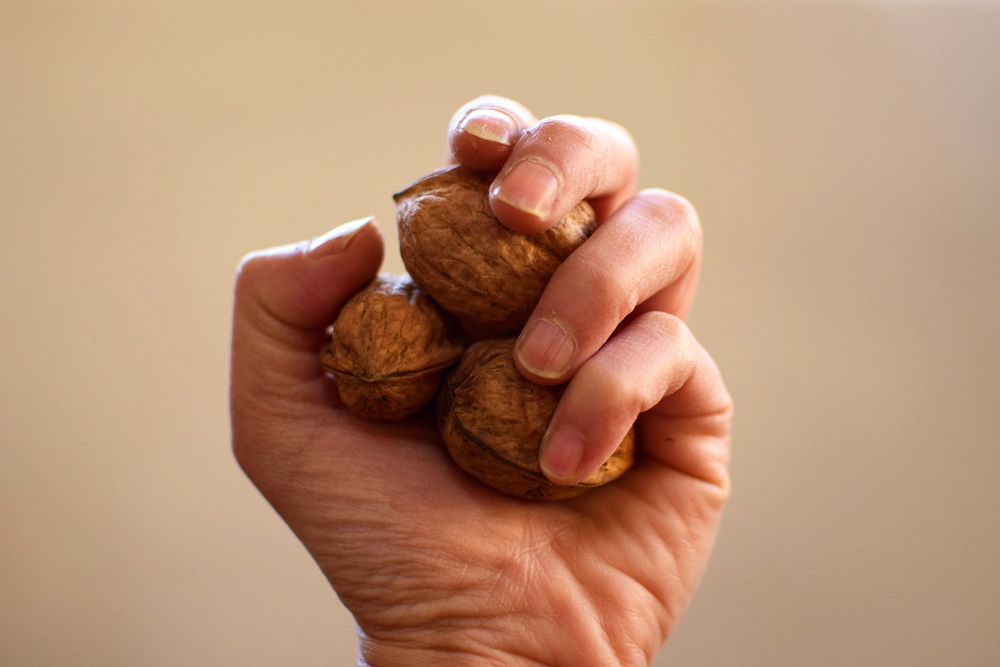
“When you spin clockwise and counterclockwise, your brain is also constantly moving to keep pace, and this kind of stimulation helps activate brain function,” Wu said. If kung fu balls are unavailable, you can use walnuts in their shells instead. As a food, walnuts are rich in anti-inflammatory unsaturated fatty acids, omega-3, and resemble the brain in shape. In traditional Chinese medicine (TCM), they are considered a brain-boosting food, and eating them after spinning provides benefits twice served.
In addition, learning to play the piano is also a way to exercise the fingers and slow brain degeneration. However, for those without a piano, spinning balls or walnuts is simpler.
Exercise Slows Cognitive Decline
Besides hand training, regular exercise is equally important. A review published in Ageing Research Reviews, which included data from more than 2 million people, found a significant association between moderate-to-vigorous-intensity exercise and a reduced risk of Alzheimer’s disease.
Certain Foods Protect the Brain
In addition to getting enough exercise, what you eat also directly affects brain health. For foods that help prevent dementia, Wu recommends deep-sea fish rich in omega-3 fatty acids, as well as ginkgo nuts and egg yolk oil, which serve as both food and medicine.
1. Ginkgo Nuts
The fruit of the ginkgo tree is called “white fruit” in TCM and can be used as a daily dietary therapy, usually cooked with white fungus and a small amount of rock sugar. Special attention should be paid to the amount and how they are eaten. About 10 a day is sufficient, and they must be thoroughly cooked to avoid toxicity.
Ingredients
- 1/2 ounce ginkgo nuts
- 0.7 ounce soaked white fungus
- 0.4 ounce powdered rock sugar
Preparation
1. Remove the shells and cores from the ginkgo nuts and wash them. If using canned ginkgo nuts that have already been de-shelled and de-stoned, omit this step.
2. Wash the white fungus, tear it into pieces, and remove the stems.
3. Place ginkgo nuts and white fungus into a pot, add water, bring to a boil over medium heat, then simmer over low heat for one hour. Add rock sugar to taste.
Soaking method for dried white fungus: Commercially available white fungus is usually sold dry. Soak in cold water for about four hours or in warm water for about two hours, until it softens. Do not soak white fungus in hot water.
2. Fish
A key factor affecting brain health is chronic inflammation, and fish are rich in omega-3 fatty acids, which help regulate inflammatory responses and protect the nervous system. Steaming is the best way to cook fish—avoid frying and deep-frying to prevent nutrient loss and the production of unhealthy fats.
A large meta-analysis published in 2024 compiled data from 35 studies comprising more than 849,000 people and found that those who ate more fish had a significantly lower risk of cognitive decline and dementia. Compared to those who rarely ate fish, those with the highest fish intake had approximately 18 percent lower risk of cognitive decline, 18 percent lower risk of dementia, and 20 percent lower risk of Alzheimer’s disease.
3. Egg Yolk Oil
Lecithin in egg yolks is structurally similar to phospholipids in the brain. Phospholipids can coat neurons, facilitating nerve signal conduction.
Egg yolk oil is a popular TCM prescription for brain health. The traditional method involves slowly simmering egg yolks over low heat—however, that process produces a lot of smoke, making it inconvenient to prepare at home. Commercially available egg yolk oil is also an option.
Avoid Trans Fats
While supplementing with brain-boosting nutrients, it is also crucial to be aware of foods that may harm the brain. Trans fats are a major dietary hazard we should avoid, Wu said, as they can cause chronic inflammation and blockages in the cardiovascular system and the brain. Trans fats are commonly found in industrially produced cookies, desserts, and some breads. Foods fried at elevated temperatures may also contain trans fats.
Factors That Accelerate Brain Degeneration
Besides diet, high-risk factors for brain degeneration include:
1. Sleep Disorders and Staying up Late: Sleep problems are among the most critical factors contributing to brain degeneration, Wu said. Even with sleeping pills, poor sleep quality makes it difficult for the brain to truly rest; some patients taking sleeping pills may also experience accelerated memory decline.
2. Irritability, Anxiety, and Excessive Mental Exertion: Long-term stress and anxiety can trigger chronic inflammation in the body, affecting vascular and brain health. Combined with excessive mental exertion and prolonged periods of staying up late, the brain is easily kept in a high-load state, accelerating degeneration.
3. High Blood Pressure, High Blood Sugar, and High Cholesterol: High blood pressure, blood sugar, and cholesterol affect the function of blood vessels throughout the body, including blood flow to the brain.
4. Endocrine Disorders: Endocrine disorders can indirectly affect brain function. For example, hypothyroidism leads to insufficient energy, causing fatigue and weakness, affecting brain function. Menopause is often accompanied by hormonal changes, which can easily lead to insomnia and increase the risk of brain degeneration.
Dementia Is Not Forgetfulness
Dementia is the result of long-term accumulation of all the negative factors, and many early warning signs are often mistaken for normal aging, missing the opportunity for prompt treatment. Some people believe that forgetfulness in old age is a normal phenomenon, but Wu points out that there is a clear difference between general forgetfulness and dementia. Normal aging involves occasional forgetfulness, but the memory can still be recalled later; dementia, on the other hand, involves the loss of short-term memory, with no recall of recent events—a significant warning sign.
Dementia is related to damage to brain structure, affecting not only memory but also causing emotional disturbances and behavioral changes. Some patients are mild-mannered before the onset of the disease, but later become easily irritable and prone to swearing. This is a result of damage to the frontal lobe, which governs emotional and cognitive functions. At the same time, patients’ spatial awareness also deteriorates—they may not be able to find their way home after going out or even forget their own address.
Dementia does not occur overnight. Adjusting diet, exercise, and daily routines, and paying attention to early symptoms of dementia, are essential for a more enjoyable old age.










Post Comment